Sunday, April 7, 2013

The Geranium (Pelargoniums)


"Peppermint Twist"
The time is almost here to plant our gardens, and start to enjoy the 2013 growing season.  Hopefully you've given thought to the colours and textures you hope to create in both your garden and your pots and planters.  The options available to you are endless!

"Raspberry Twizzle"
One plant that has long been a staple in the garden and window box is the geranium.  To be honest that has always been one of my least favorite annuals... Until recently. 

Spending time in a greenhouse prior to the growing season has given me a true appreciation for these plants that I have often overlooked.  The colours, varieties, and uses are endless, and I can honestly say my garden and planters will include a couple of geraniums this year.

"Rocky Mountain Light Pink"
I have always thought of them sort as a plant my grandmother would have kept, as I've often seen gardeners with years of experience planting geraniums year after year.  If you've read other posts in my blog you know that I tend to like the unusual flowers and varieties available.  The plain red geranium isn't one i would consider, however there are so many more beautiful options its hard not to become enamored with a couple of the varieties available.

"Cascade White"
There are more varieties and colours available than a single blog posting could ever get into, I am going to highlight a few of my favorites in the photographs on this blog.  There are many more I don't currently have photo's of.  Some geraniums are grown for their flowers, others for their leaves, others for scent.  There are upright, and trailing varieties, the selection really is endless.
"Americana White Splash"

Geraniums care is quite easy, which is likely one of the reason they have been so popular for so long.  The main requirements for geraniums (as with most annuals) is light, water, and fertilizer... If you get the right mix of all 3 of these factors, you're sure to have success!

"Caliente Fire"
Geraniums require a lot of light... full sun is preferred.  By full sun, the hot afternoon sun is required to keep these flowers happy and blooming for the full season.  All geraniums will tolerate partial sun or filtered sun, but you may not get the quantity of blooms this plant is capable of providing.

"Classic White"
Watering Geraniums is crucial... Although geraniums can withstand BRIEF times of dryness, they really should be kept evenly moist all the way to the bottom of the roots... but not wet (soggy).  This is particularly important in hot dry weather... as a rule the more hot and sunny the weather... the more water your plant needs!   If the plant doesn't get enough water you're sure to notice it in the leaves, and it won't bloom to its full potential.

"Americana Rose Mega Splash"
Fertilizing is equally important to keep your geraniums (and other annuals) blooming and growing.  Feed your geraniums weekly as they are heavy feeders...  I like to use a balanced fertilizer like 15-15-15 or 20-20-20 water soluble fertilizer once a week throughout the growing season.  This will ensure that you get constant and prolific blooms and active growth throughout the season.  If you're not able to commit to regular fertilizing like this, a slow release fertilizer is a good alternative, mixing the required amount (and a bit more for geraniums) into the soil will release small amounts of fertilizer with every water... Although the water soluble fertilizer is definitely the preferred method.

In order to keep your plants looking good, it is important to dead-head the finished blooms by pinching them off, I like to do this as close to the stem as possible to keep the plant looking its best.

"King of Balcon"
If you happen to see your leaves yellowing, it is very likely one of two problems... either too much water, or too little water.  If the soil seems soggy constantly, drainage might be an issue, and you should cut back a bit on the watering... if the soil is dry and dusty, your plant needs more water.  It is a good habit to replace the soil in your containers and window boxes every year.

Many people overwinter their geraniums indoors, in a bright window in the house... I don't recommend doing this, as it normally takes these older plants longer to get going in the spring, and the plants don't end up being as vigorous as new plants... However the option is definitely there.  I like to change my colours and varieties up from year to year... and in all honesty... I don't have the room to keep them over.

Geraniums are normally fairly inexpensive... If you have planted them in the past, try a new variety... if you haven't planted them (like me) give them a try!  I know my garden will have a few of the varieties mentioned on this blog this year!
"Rocky Mountain Pink"
All Photographs on this blog taken by Paul Gellatly

Thursday, February 21, 2013

Allan Gardens Conservatory

Photograph by Paul Gellatly
Photo by Paul Gellatly

A midst the concrete jungle of downtown Toronto, sits an historic oasis.  The history of the Allan Gardens Conservatory dates back to 1879. 

The original Pavilion Hall hosted concerts and social events... including a lecture in 1882 by Oscar Wilde. 

The original building burnt down in 1902, and was replaced by the current Palm House.  Additions were made to the conservatory in 1924, and 1956.

Photograph by Paul Gellatly

Photo by Paul Gellatly
The current buildings include 6 greenhouses and over 16000 square feet of beautiful and unique plants.  There are two Tropical Houses, A Cool Temperate House,  a Palm House, a Tropical Landscape House, and an Arid House.
Photo by Paul Gellatly
Photo by Kelly Butts

Allan Gardens is open year round, 365 days a year from 10 am to 5 pm, and is free to visit!  There is metered street parking all around the park... Plan to spend at least an hour or so going through the greenhouses.

A beautiful collection of tropical plants and meandering pathways are sure to delight anyone who takes the time to explore this true Historic Gem in downtown Toronto.
Photograph by Paul Gellatly


Friday, January 18, 2013

Garden Import... Where Quality and Unique Plants Meet

Agapanthus 'Blue Heaven'
Amorphophalus Bulbifer
My path of horticulture has led me to many great gardens, garden centres, and mail order companies, all over North America.  One company that has impressed me for more than 20 years is Garden Import.  Garden Import is a family run business in its 30th season.
Sauromatum Venosum

Garden Import's quality and selection gives me something to look forward to every year.  This year is no exception! Its no secret that I like plants that are unusual.  Plants that you don't find in every home or garden are the ones that capture my attention and keep my interest in horticulture growing.

Clematis 'Princess Kate'
Bessera Elegans
Garden Import carries quality rare and unusual plants, seeds, and bulbs suitable for indoor, outdoor, container, and garden plantings.  The Customer service is excellent and the website is very informative and user friendly. Each plant on the website is listed with growing tips, size, colour and condition requirements.

From the blue Agapanthus, to the yellow Clivia, the pink Clematis, to the black Bat Flower there's sure to be something that catches your eye.
Hellebore 'Amethyst Gem'
I will most definitely be placing an order with Garden Import this spring;  including the plants pictured on this blog.

Try something new this year in your containers or in your garden, and plant something that will be sure to be a conversation piece for family and friends to admire.

Be sure to check out their website, and sign up for their email updates.

http://www.gardenimport.com/index.php


Tacca Chantrieri
All photographs used with permission from Dugald Cameron
President at Garden Import


Friday, January 4, 2013

The Jovial Jade

Photograph by Paul Gellatly (Crassula arborescens)
Photo by Paul Gellatly
(Crassula ovata Gollum)
Another year has come and gone, and the blog has been very successful!  In one year this blog has had just shy of 16000 views in 82 countries.  Thanks for walking down the path or horticulture with me and continuing to support this blog!

A lot of things have changed in my life over the past year.  My original plan to move to the west coast of Canada has been postponed as I was recently diagnosed with Diabetes.  Due to this diagnosis I decided to stay where I have a family doctor and stable employment.  My roommate and I subsequently decided to leave the Condo Life and opted to move to a house.  I'm very excited about the gardening potential for next season!

Photo by Paul Gellatly
(Crassula Argentea)
The move created a need to cut back on my houseplants from over 200 to just over 100.  The house has a large north facing window, where most of my plants were thriving in southern exposure with floor to ceiling windows at the condo.  I made a lot of necessary reductions and was able to give my friends a number of plants I knew would no longer thrive in these conditions.  When one door closes... another always opens...
Photo by Paul Gellatly
(Crassula arborescens)

With the hustle and bustle of the Christmas holidays over, the decorations put away, and life returning back to normal, its a great time to take a look at your home and see where you can add some life and beauty to your living space.  Garden Centres tend to be quite slow in January and February, which makes it a great, relaxing time to do some shopping for new houseplants.

Photo by Paul Gellatly
(Crassula ovata 'Variegata')
One plant I believe everyone should have in their collection is the Jade Plant.  I have 5 different varieties of Jade Plants in my collection. Although the most common variety is the normal green variety, with a little bit of luck and research you can find other varieties available to you. A lot of people have told me they have difficulties growing Jade Plants.  I have put together a few tips to help you have success with this beautiful plant.

Photo by Paul Gellatly
(Crassula Argentea)
Firstly Light Conditions...Jade Plants require a lot of light, a south facing window is ideal, but mine do quite well in an east or west facing window as well.  In a south facing window you may even get your Jade Plant to flower!  I do have a couple of my Jade Plants in a north facing window, and they do live, but don't thrive.

One common problem with Jade Plants is Rot.  Many people over water their Jade (I learned my lesson) Only water the Jade when you stick your finger into the potting medium and feel no moisture.  Water less frequently in the winter.  Keeping your Jade in a Terra-Cotta (Clay) Pot will help with the moisture control, as the pot itself will wick some of the moisture from the soil.  As a rule I water mine every other week... But always check the soil before watering.

Photo by Paul Gellatly
(Crassula Argentea)
Using a succulent or cactus based soil mix, or a mix high in perlite or sand is the best option for success. Re-pot your Jade in the spring, and only pot to one size larger than the plant is currently in. Normally I don't transplant my Jade until it becomes top-heavy.

A temperature of 50 to 80 Degrees Fahrenheit is ideal for the Jade... So normal household temperatures are great!  If possible keep your Jade a bit cooler in the winter months, but never below 45 Degrees.  Having the plant cooler in the winter can help promote your Jade to flower.

Photo by Paul Gellatly (Crassula Argentea)
Fertilize your Jade Plant with a high Phosphorus Fertilizer such as 10-20-10, every 3 months in the active growing season April to October.  Do not fertilize the plant in the winter months.  Prune your Jade for shape if you like, although I like to let mine grow naturally.  If you do prune the plant... Jades are very easy to start from cutting, so place the cuttings in soil and root them up for your friends...

Jade Plants are fairly bug and disease resistant.  One common pest that may infect your Jade is the Mealy Bug.  Mealy Bugs are a common household plant pest.  They can be washed away with water, sprayed with Rubbing Alcohol, or a household pesticide...  I try not to use pesticides unless absolutely necessary.

I have seen Jade Plants as tall as 8 feet tall, down to 6" in height.  With the variety of sizes and colours available growing a Jade Plant will provide you with a beautiful houseplant for many years to come.

Photo by Paul Gellatly with Crassula Argentea and Portulacaria afra 'Tricolour'

Thursday, October 25, 2012

Get a Jump Start on Spring!


Photograph by Paul Gellatly
(Purple Crocus) Photograph by Paul Gellatly
The season has pretty much come to an end here in Toronto, The fall mum's are flowering, the leaves on the trees have changed, many already bare... ready to usher in winter.  There are still a few things you can do to prepare your beds for the season ahead, and get a jump start on your 2013 garden... by planting some bulbs now.

Photo by Paul Gellatly
When bulbs begin flowering it signals the start of the gardening season ahead.

Bulbs are an easy way to add a welcome splash of colour after a cold winter.  All bulbs come with planting instructions when purchased; make sure to read the packaging carefully for depth, height, and flowering time.  Extend your spring garden by planting early, mid, and late flowering bulbs.

The selection of bulbs on the market is vast.  There are many types in any colour you can imagine.  It would be impossible to cover all of the bulbs available to you in a blog entry, but here's a few to get you started.
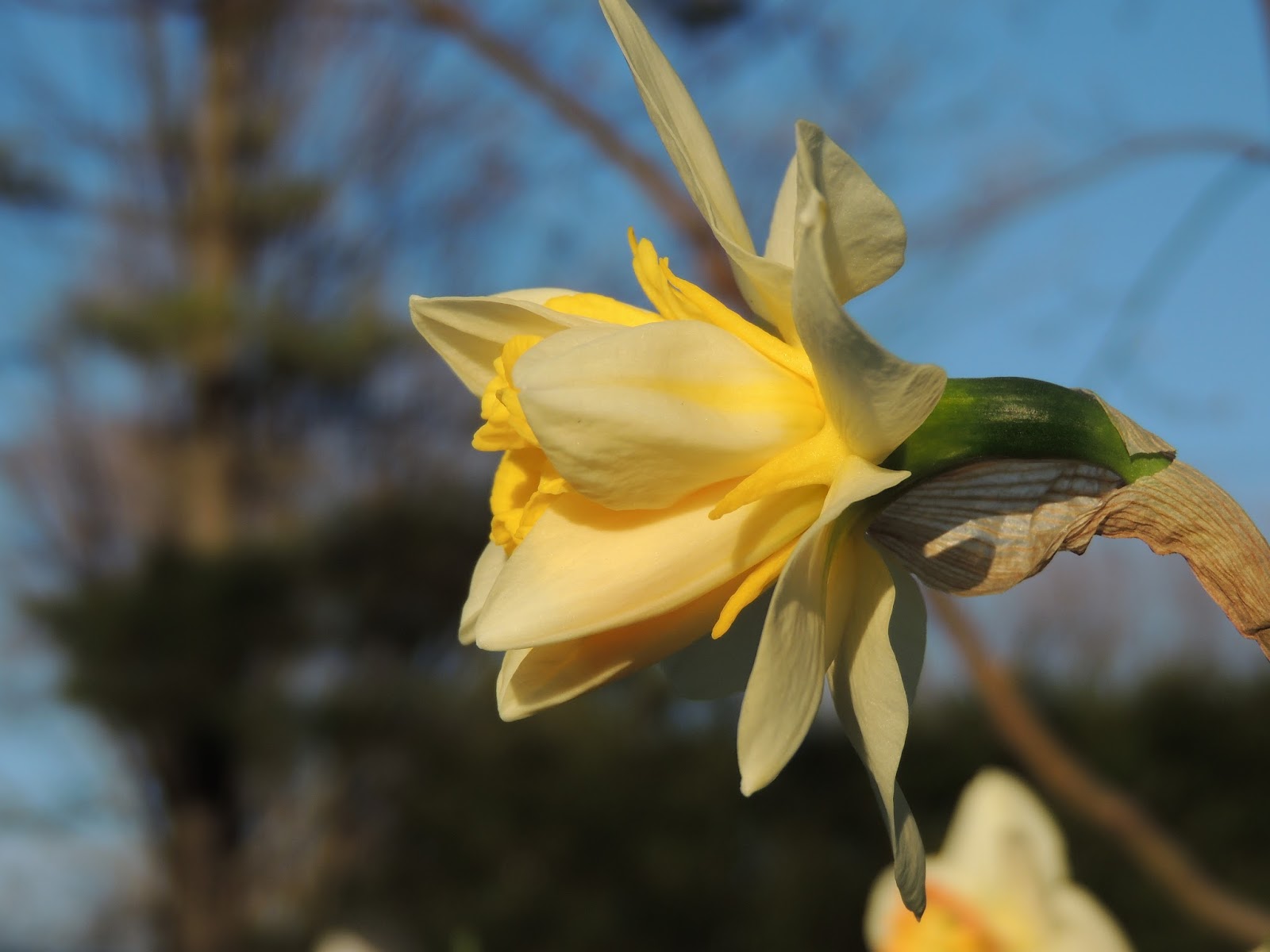
(Daffodil) Photo by Paul Gellatly

I have never been partial to yellow flowers, however an exception has to be made for the daffodil (Narcissus) family.  There are so many great varieties available.  The Narcissus is often used in naturalized settings, as they spread to form beautiful masses of yellow or white blooms.

(Hyacinth) Photo by Paul Gellatly
If its a sweet smell you're after, you can't beat the hyacinth flower for fragrance.  Normally found in shades of white, purple, and pink, you are sure to enjoy these in blooms from the moment they first open.

Grape Hyacinths are a great addition to any garden or spring planter, with low clusters of blue, white, and even pink flowers, they're sure to work with any colour scheme. The foliage of these flowers also grows in the fall, and can provide a glossy grassy green colour to your fall beds.   The grape hyacinth is also frequently used as a naturalizing bulb.
(Grape Hyacinth) Photo by Paul Gellatly

(Allium) Photo by Paul Gellatly
One of my all-time favorite spring bulbs has to be the allium, although the leaves are rarely attractive,  the tall purple, white, or yellow ball is sure to catch your eye.  Ranging in size from 6 inches to 4 feet in height, and bloom size from 1" to 8" or greater, there are many area's of the garden that allium can be utilized.

Another bulb worth considering is the fritillaria. Be careful where you plant the bulb as the plant/bloom has a strong odour likened only to that of a skunk.  Growing up I remember my father had one planted right outside the front door... maybe not the best location...  But bloom on this plant is definitely worth it!  Usually found in orange or yellow, a tall plant and flower, they're great for the middle to back of a flower bed.  When planting the fritillaria, you will notice an indent in the bulb, I would recommend planting this bulb on its side, to avoid water rotting out your bulb

(Galanthus-Snow Drop)
Photo by Paul Gellatly
The Snow-drop is usually the first flower in the garden, often blooming when there is still snow on the ground.  A sure sign that spring has arrived.  The small white and green flowers hang throughout the garden like small lanterns.

Yellow Crocus Photo by Paul Gellatly
The Crocus is one of my favorite bulbs.  Great for the edge of a garden, the cheerful blooms are one that I believe should be in every spring garden. Found normally in shades of white, yellow and purple, this bulb is a great addition to the front of your flower bed.

(Tulip) Photo by Paul Gellatly
Finally the tulip. Tulips have become an integral part of the spring garden, offering more varieties than any other spring bulb.  Ranging in colour from red, yellow, white, purple, orange, black and everything in between, from heights of 2 inches to 3 feet, no spring garden is complete without a few pockets of tulips.

(Tulip) Photo by Paul Gellatly
As a general rule, unless you're dealing with a formal bed, it is always good to plant bulbs in odd numbers.  I don't tend to plant less than 7 bulbs in close proximity if you want to create a strong impact.  Plant early, mid and late season tulips so you can enjoy these beautiful flowers throughout the spring.

A couple of things to consider when planting, is as a rule, the point on the bulb goes up.  Make sure to purchase a box of bone meal, to spread over the surface of the soil and lightly rake over. This will deter squirrels from digging up your bulbs, and will provide nutrients to the plant in the spring.

Head out to your local garden centre and pick up some bulbs, you'll thank me next spring!
(Crocus) Photograph by Angel W.

Sunday, October 7, 2012

The Happy Hibiscus


Hibiscus Flower Photograph by Kelly Butts
Hibiscus Flower Photo by Paul Gellatly
One of the more common flowering houseplants has long been the Hibiscus.  Until fairly recently I was only familiar with the common, red, orange, yellow flowering varieties, as they are the most commonly available.

Hibiscus Flower Photo by Paul Gellatly
Doing a bit of searching and research will open your eyes to the truly amazing colours and varieties available.  I currently own six different hibiscus, and if I had a greenhouse I'd likely have many many more.

They come in shades of red, white, yellow, orange, purple, pink, or a mixture of any of those colours.  Also available in double flowers, variegated leaves, any many sizes of plants and blooms.

Hibiscus Flower Photo by Paul Gellatly
With proper care Hibiscus can provide you with beautiful blooms for years to come.  Hibiscus need atleast 2 hours of direct sunlight a day, preferably more.   A South or West facing window is the ideal.  Keeping this tropical plant warm is definitely a key factor in successfully growing hibiscus.  Keep away from winter drafts and cool temperatures.

Hibiscus Flower Photo by Paul Gellatly
Hibiscus need regular watering but the soil should be allowed to dry out between watering.  Never let your Hibiscus stand in water for more than half an hour.

I fertilize my Hibiscus weekly during peak growing season (March to October)  and reduce to every 3 weeks (November to February). Choose a fertilizer low in Phosphorus (middle number)  20-5-20 is ideal.  If the middle number is too high, you will produce beautiful leaves, but few flowers.

Hibiscus Flower Photo by Paul Gellatly
In order to maintain a healthy plant some pruning may be required... I would recommend pruning your hibiscus between Late July and Early October.  I remove any weak branches, and just under 1/3 of the new growth in order to keep the plant bushy and healthy.  Re-potting should be done in the spring and only one size bigger than the pot its currently in.

Its good practice to shower your hibiscus, either in the shower, or with the spray setting on the faucet, in luke warm water.  I do this bi-weekly.  This will keep the plant free of pests, and keep the leaves looking clean and dust free.

If you have a sunny window in your home and want a plant that offers you the "wow" factor...  you really can't beat some of the Hibiscus plants available today.   Ranging in Price anywhere from $5.00 to  $150.00 in sizes from 6 inches to 8 feet.  They are a great plant for beginners and enthusiasts alike.


Hibiscus Flower Photograph by Paul Gellatly